Choosing the Right Period Products
There are many period products available, and the best option depends on your comfort, lifestyle, flow, and personal preferences.
Common Options
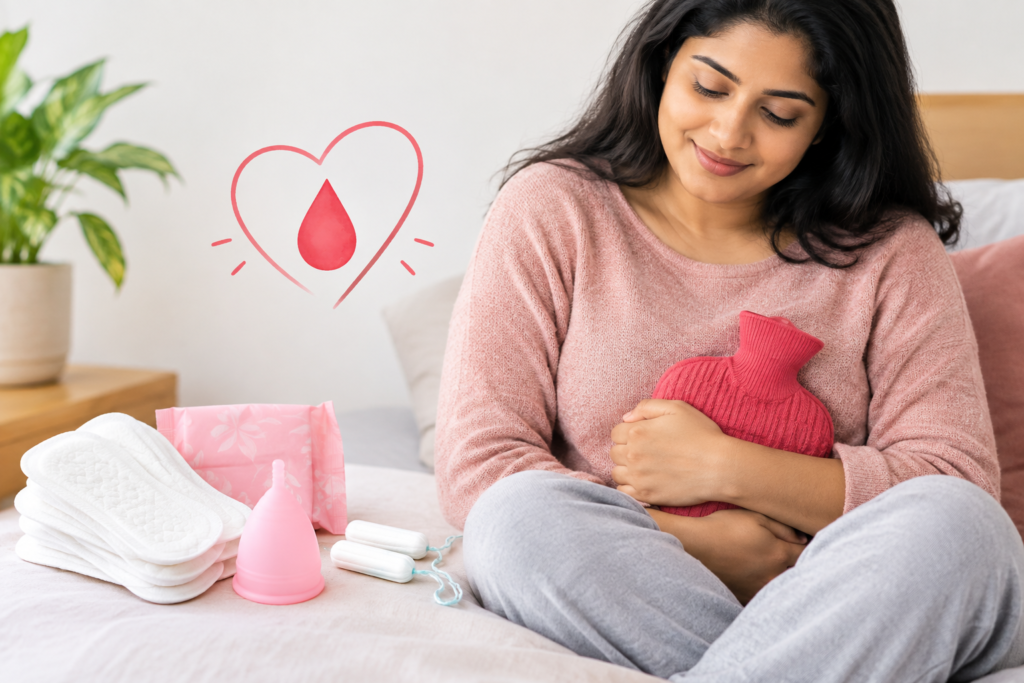
- Pads: Easy to use and available in different sizes and absorbencies. Change them regularly to stay comfortable and reduce irritation.
- Tampons: Useful for active days and swimming. Choose the lowest absorbency that meets your needs and change tampons according to the product instructions.
- Menstrual cups: Reusable cups collect menstrual blood and can provide protection for several hours when used and cleaned correctly.
- Period underwear: Washable underwear designed to absorb menstrual flow. It can be used alone or as extra protection.
- Panty liners: Helpful for light flow, spotting, or the final days of a period.
Wash your hands before and after changing or inserting any period product. Always follow the instructions provided by the manufacturer.
Managing Cramps and Discomfort
Period cramps happen when the uterus contracts to release its lining. Mild to moderate cramps are common, but they can still be uncomfortable.
Some ways to ease period pain include:
- Applying a heating pad or hot-water bottle to the lower abdomen or back
- Taking a warm bath or shower
- Practicing gentle stretching, yoga, or walking
- Drinking enough water
- Getting sufficient rest and sleep
- Using over-the-counter pain relief as directed
Some people also find that reducing caffeine, eating balanced meals, and avoiding smoking can help manage symptoms. If pain consistently interferes with school, work, sleep, or normal activities, speak with a healthcare professional.
Supporting Your Body During Your Period
Your body may need extra care during menstruation. Choose nourishing foods that provide iron, protein, fiber, and healthy fats. Iron-rich choices include beans, leafy greens, eggs, meat, tofu, and fortified cereals.
Staying hydrated may help reduce bloating and fatigue. Keep a water bottle nearby and include water-rich foods such as fruit, vegetables, and soups in your meals.
Gentle movement can also improve circulation and support your mood. You do not need to follow an intense workout routine; a short walk or light stretching can be enough.
Practicing Good Hygiene
Good hygiene is a key part of period care. Change disposable products regularly, even when the flow is light. Reusable products should be washed or sterilized according to their instructions.
Avoid scented pads, tampons, wipes, and washes if they cause irritation. The vagina is self-cleaning, while the external area, known as the vulva, can usually be cleaned with warm water and a mild, fragrance-free cleanser.
Wear breathable underwear and change out of damp clothing when possible. These simple steps can help reduce discomfort and irritation.
When to Seek Medical Advice
Some menstrual symptoms may indicate a health concern. Contact a healthcare professional if you experience:
- Pain that is severe or suddenly becomes worse
- Bleeding that soaks through a pad or tampon every hour for several hours
- Periods lasting longer than usual
- Bleeding between periods or after sex
- Fainting, extreme weakness, or shortness of breath
- A sudden change in your regular cycle
You deserve support when period symptoms affect your quality of life. Period care is not just about managing bleeding—it also means listening to your body, preparing for your cycle, and seeking help when something does not feel right.

Pingback: 10 Things Every Woman Should Keep in Her Period Care Kit - Women Wellness Hub