Skin and Hair Changes After 40: What's Normal and What Helps
Thinning hair, slower growth, and changing skin texture are common after 40. Here’s what’s driving it and what genuinely helps.
5 min read
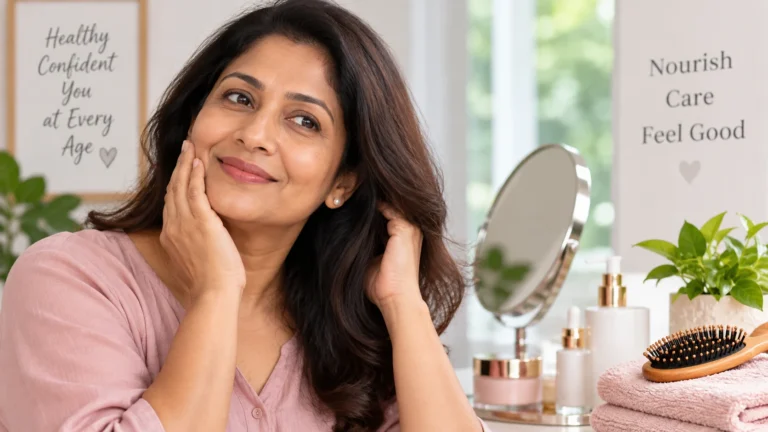
Quick take
- Hormonal shifts affect hair thickness and growth cycle, alongside skin’s moisture and elasticity.
- Gentler hair care and a simplified skincare routine often help more than adding more products.
- Nutrition, particularly protein and specific vitamins, plays a supporting role for both.
- Gradual, persistent changes are common; sudden or patchy hair loss is worth discussing with a doctor.
Why hair changes after 40
Hormonal shifts, particularly declining estrogen, can affect the hair growth cycle, often leading to finer, slower-growing hair or a wider part than you remember. This is common and, for most people, gradual rather than sudden. A gentler approach to hair care makes a real difference: sulfate-free shampoo, less frequent heat styling, and avoiding tight hairstyles that pull on the scalp all help reduce additional strain on hair that’s already changing.
Why skin changes alongside it
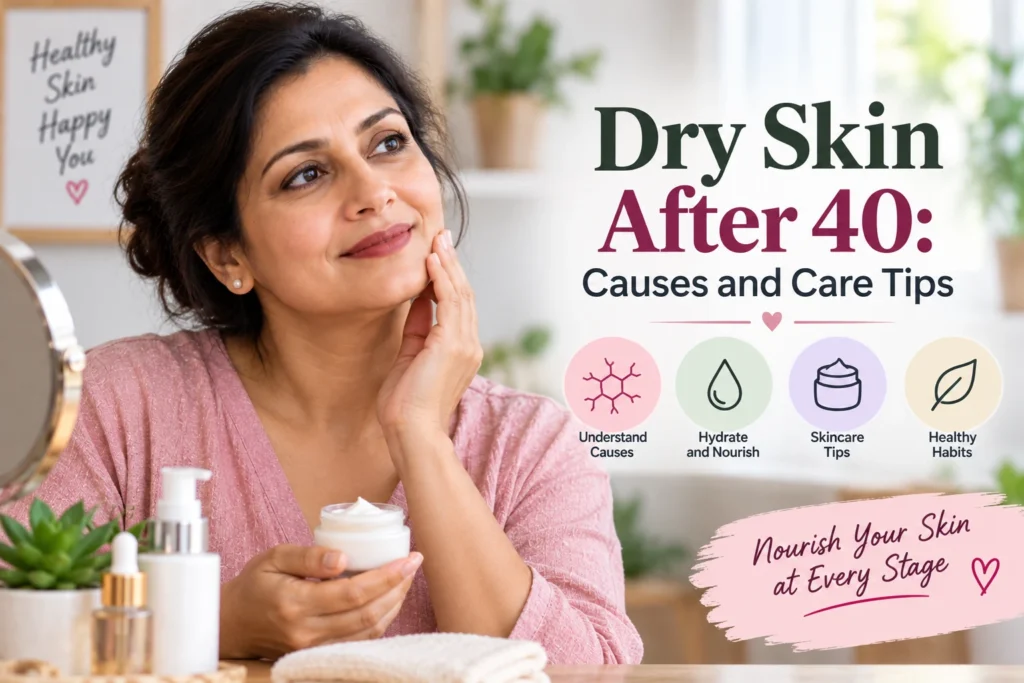
The same hormonal shifts that affect hair also reduce skin’s collagen and moisture retention, which is why many people notice their skin feeling drier or less resilient around the same time as hair changes. We cover this in more depth, including a full routine, in our guide to dry skin after 40 — the short version is that a simpler, gentler routine tends to outperform stacking more products.
Products that may help
A few relevant products, chosen for usefulness rather than promotion.
Sulfate-Free Shampoo and Conditioner Set
A gentler option that avoids stripping natural oils.
₹700–₹1,500
Biotin and Collagen Supplement
Supports hair and skin from the inside alongside a balanced diet.
₹900–₹1,800
As an Amazon Associate, Luna Comfort earns from qualifying purchases. See our Affiliate Disclosure.
A simple hair care approach
A sulfate-free shampoo and conditioner, used a little less frequently than you might be used to, keeps natural oils from being stripped unnecessarily. Reducing heat styling, or using a heat protectant when you do style, limits additional damage to hair that’s already more fragile. A weekly deep conditioning treatment and loose, gentle hairstyles round out a low-effort routine that supports hair through this transition rather than fighting it.
Nutrition's supporting role
Protein, iron, and biotin all play a role in hair health, and a generally balanced diet tends to matter more than any single supplement. Our nutrition guide for women over 40 covers this in more detail, including which nutrients matter most as your body changes.
When to check in with a doctor
- Sudden hair loss, rather than a gradual thinning, is worth mentioning to a healthcare provider.
- Patchy hair loss, as opposed to overall thinning, has different possible causes worth checking.
- Persistent scalp irritation or itching alongside hair changes is worth a second look.
- Significant, rapid skin changes alongside hair loss are worth mentioning together, since they can share underlying causes.
Frequently Asked Questions
Is hair thinning after 40 always related to hormones?
Hormonal shifts are a common contributor, but hair thinning can have multiple causes, including nutrition, stress, and genetics. If it feels sudden or severe, it’s worth checking with a healthcare provider.
Can diet alone fix hair thinning?
Diet plays a supporting role, particularly protein, iron and biotin, but it’s rarely the whole picture. A gentler hair care routine alongside good nutrition tends to give the best results.
Should I switch my entire skincare and hair care routine at once?
Gradual changes are usually easier to notice the effects of and stick with, rather than overhauling everything simultaneously. Start with one or two changes, like a gentler shampoo or a simplified skincare routine, and build from there.
Is it normal for hair and skin to change around the same time?
Yes — since both are affected by the same underlying hormonal shifts, it’s common to notice changes in each around a similar time.
Keep reading


Wellness insights for women in midlife
Practical health, personal care and wellness guidance — delivered without the noise.
Your email address