Best Foods for Women Over 40: A Practical Nutrition Guide
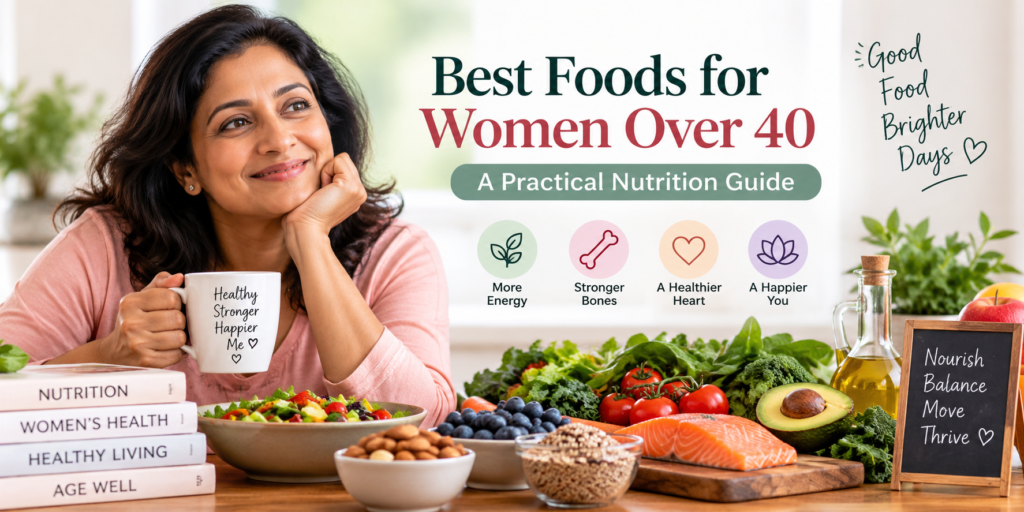
A practical, no-fad guide to the nutrients that matter most for energy, bones and metabolism after 40 — built around everyday foods, not restriction.
7 min read · Medically reviewed
Quick take
- Calcium, vitamin D and protein needs increase in importance after 40 to protect bone and muscle.
- Fiber-rich, whole foods support metabolism, digestion and heart health through hormonal changes.
- There’s no single “perfect” diet — consistency with whole foods matters more than any trend.
- Small, sustainable swaps tend to stick better than an entire diet overhaul.
Products that may help
A few relevant products, chosen for usefulness rather than promotion.
Vitamin D3 Supplement
A common option when sun exposure or diet alone isn’t enough.
₹800–₹1,200
Protein-Rich Snack Bars (Multipack)
A convenient way to add protein between meals.
₹1,200–₹2,000
Omega-3 Fish Oil Supplement
Supports intake of omega-3s alongside dietary sources.
₹1,200–₹2,400
As an Amazon Associate, Luna Comfort earns from qualifying purchases. See our Affiliate Disclosure.
Calcium and vitamin D for bone health
Bone density naturally declines with age, and that decline speeds up as estrogen drops during perimenopause and menopause. Calcium-rich foods — dairy, leafy greens, fortified plant milks — help support bone strength.
Vitamin D helps the body absorb that calcium, and comes from safe sun exposure, fatty fish, fortified foods, or a supplement if levels are low; a simple blood test can tell you where you stand. Many women are lower in vitamin D than they realize, especially with limited sun exposure.
Protein for muscle maintenance
Muscle mass declines gradually with age in a process called sarcopenia, and adequate protein intake is one of the most effective ways to slow that decline, especially when paired with strength training. This same muscle loss is part of why perimenopause weight gain can happen even without major changes to eating habits.
Aiming for a source of protein at each meal — eggs, fish, poultry, legumes, Greek yogurt — is a simple way to meet increased needs without overhauling your whole diet. Spreading protein across the day tends to work better than loading it all into one meal.
Fiber for digestion and heart health
Whole grains, vegetables, and legumes provide fiber that supports digestion and helps manage cholesterol and blood sugar — both of which become more relevant as cardiovascular risk factors shift with age. Most women fall short of daily fiber targets, so small daily increases add up.
Gradually increasing fiber, along with plenty of water, also helps avoid the digestive discomfort that can come with a sudden change. Adding one extra fiber-rich food per day is an easier place to start than overhauling every meal at once.
Healthy fats and omega-3s
Fatty fish like salmon and sardines, along with walnuts, flaxseed and olive oil, provide omega-3 fatty acids that support heart and brain health, may help with joint comfort and mood, and are also linked to skin that holds moisture better — relevant if you’re also managing dry skin after 40.
These fats are worth including regularly rather than viewing fat intake as something to minimize across the board. Two to three servings of fatty fish a week is a reasonable target for most women.
Foods and habits worth moderating
Limiting added sugar and alcohol, and paying attention to sodium intake for blood pressure, tends to matter more after 40 than it did in earlier decades. This is about balance, not elimination — an occasional treat isn’t going to undo a generally solid pattern of eating, and rigid rules tend to backfire over time.
When to see a doctor or dietitian
If you experience significant unexplained weight changes, persistent digestive symptoms, or simply want personalized guidance — especially alongside an existing health condition — a doctor or registered dietitian can help tailor recommendations to your specific needs and check for any nutrient gaps with bloodwork.
This article is for general information only and is not a substitute for professional medical advice. Read our full Medical Disclaimer.
A simple way to start
- Add one protein source and one fiber-rich food to your plate at each meal, rather than tracking everything at once.
- Keep a simple running list of what you already eat that fits this guide — most people are closer than they think.
- Batch-cook a few staples (beans, whole grains, roasted vegetables) so healthy defaults are easy to reach for.
- Consider a blood test for vitamin D and iron if you’re unsure where you stand — it takes the guesswork out.
Frequently Asked Questions
Do I need to cut carbs after 40?
Not necessarily. Whole-food carbohydrates like whole grains, fruit and legumes provide fiber and nutrients that are genuinely helpful at this life stage. It’s refined and added sugars that are worth moderating, not carbohydrates as a category.
How much protein do I actually need?
Needs vary by body size and activity level, but many women find that aiming for a palm-sized portion of protein at each meal is a simple, workable target without needing to weigh or track food.
Are supplements necessary, or is food enough?
Food-first is generally the goal, but supplements like vitamin D are common and reasonable when levels are low or diet alone doesn’t cover a specific gap. A blood test is the most reliable way to know what you actually need.
Can diet alone prevent bone loss?
Diet plays an important role, but weight-bearing exercise and, for some women, medical evaluation or treatment also matter. Nutrition is one part of a broader approach to bone health, not the whole picture.
Is intermittent fasting a good idea after 40?
It works well for some women and not others — there’s no universal answer. If you try it, pay attention to how it affects your energy, sleep and mood, and check in with a doctor if you have any underlying health conditions.
Products that may help
A few relevant products, chosen for usefulness rather than promotion.
Vitamin D3 Supplement
A common option when sun exposure or diet alone isn’t enough.
₹800–₹1,200
Protein-Rich Snack Bars (Multipack)
A convenient way to add protein between meals.
₹1,200–₹2,000
Omega-3 Fish Oil Supplement
Supports intake of omega-3s alongside dietary sources.
₹1,200–₹2,400
As an Amazon Associate, Luna Comfort earns from qualifying purchases. See our Affiliate Disclosure.
Keep reading


Wellness insights for women in midlife
Practical health, personal care and wellness guidance — delivered without the noise.
Your email address